
The Rotary Four-Way Test
The 4-Way Test
The ethical guide that has been a cornerstone of Rotary for decades
The 4-Way Test
Of the things we think, say or do:
Is it the TRUTH?
Is it FAIR to all concerned?
Will it build GOODWILL and BETTER FRIENDSHIPS?
Will it be BENEFICIAL to all concerned?
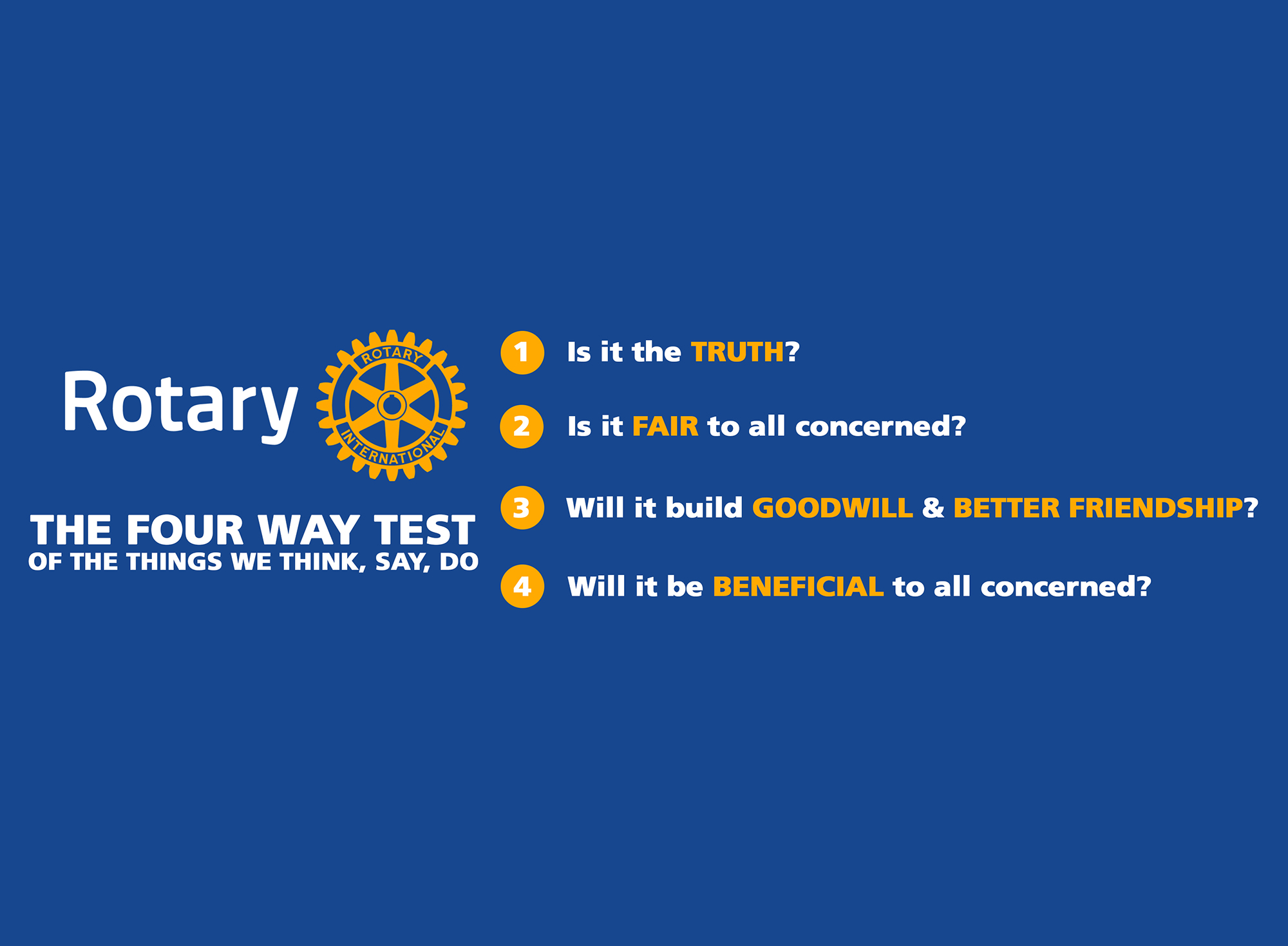
High-quality poster perfect for printing and display
Presentation Guidelines
How to Properly Deliver the 4-Way Test
1
Start with Context
Begin by explaining: "Of the things we think, say or do:"
2
Clear Pronunciation
Speak clearly and pause briefly after each question
3
Emphasis on Keywords
Emphasize TRUTH, FAIR, GOODWILL, BETTER FRIENDSHIPS, and BENEFICIAL
4
Allow Reflection Time
Give the audience a moment to consider each question
When to Use
• At the beginning or end of club meetings • During new member orientations • Before important club decisions • In educational presentations to youth • At business ethics workshops • During leadership training sessions
Best Practice Tips
For Group Recitation: • Lead with confident, measured pace • Ensure everyone can see and hear clearly • Encourage participation from all members For Teaching Moments: • Ask for examples after each question • Discuss practical applications together • Share the historical context first
Remember: The power of the 4-Way Test lies not just in reciting it, but in applying its principles to our daily lives.
The Story Behind the Test
Herbert J. Taylor's Vision
In 1932, during the depths of the Great Depression, Herbert J. Taylor was asked to take over the Club Aluminum Products Distribution Company, which was on the verge of bankruptcy. Faced with the challenge of turning the company around, Taylor knew he needed a simple, memorable way to inspire ethical behavior among employees.
Taylor created The 4-Way Test as a guide for business decisions and employee relations. He believed that if everyone in the company could apply these four questions to their thoughts, words, and actions, the company could not only survive but thrive on a foundation of trust and integrity.
Key Facts:
- Created in 1932 during the Great Depression
- Originally designed for business ethics
- Born from necessity during a company crisis
- Helped save Club Aluminum from bankruptcy
The Success Story
1932
Company near bankruptcy
1943
Adopted by Rotary International
The Test's Power
The 4-Way Test helped transform Club Aluminum from near-bankruptcy to profitability within just a few years, proving that ethical business practices are not just morally right, but also financially sound.
How It Became a Rotary Standard
1
Recognition
Herbert Taylor's success with the test gained attention in business and civic circles
2
Rotary Membership
Taylor joined the Chicago Rotary Club and shared the test with fellow Rotarians
3
Official Adoption
In 1943, Rotary International officially adopted the 4-Way Test as its own
Why Rotary Adopted It
- Simple and memorable for all ages and cultures
- Applicable to both personal and professional situations
- Aligned with Rotary's core values of service and integrity
- Proven track record of creating positive change
- Non-denominational and universally acceptable
- Practical tool for ethical decision-making
Practical Applications in Daily Life
Business Decisions
Apply the test to contracts, partnerships, hiring decisions, and customer relations.
Personal Relationships
Guide conversations, resolve conflicts, and build stronger family and friend relationships.
Community Service
Evaluate service projects, volunteer opportunities, and community involvement decisions.
Education & Learning
Use in schools, training programs, and youth development to teach ethical thinking.
Real-World Applications
Business Scenario
Situation: A supplier offers a discount for faster payment, but it would strain cash flow. Truth: Can we honestly afford this payment schedule? Fairness: Is this fair to our employees and other suppliers? Goodwill: Will this strengthen our business relationships? Beneficial: Does this benefit all parties long-term?
Personal Scenario
Situation: A friend asks you to cover for them when they call in sick to work. Truth: Would I be telling the truth if I cover for them? Fairness: Is this fair to their employer and coworkers? Goodwill: Does this build healthy relationships? Beneficial: Does this help everyone involved?
Universal Appeal
The 4-Way Test's success across cultures stems from its focus on universal human values: honesty, fairness, friendship, and mutual benefit - concepts that resonate regardless of background, religion, or nationality.